Institute for Advanced and Applied Chemical Synthesis
Institute for Advanced and Applied Chemical Synthesis
1906 - An Auspicious Year for Organic Chemistry and for Jinan University Martin G. Banwell DirectorInstitute for Advanced and Applied Chemical Synthesis, College of Pharmacy, Jinan University, Zhuhai 519070, China ABSTRACT: 1906 saw the founding of Jinan University (JNU) and it was also the year in which at least four major reactions associated with organic chemistry were discovered. As such 1906 represents a key point-of-origin for the now emergent and ongoing research efforts in organic synthesis being undertaken on the Zhuhai and Shipai campuses of JNU. A good proportion of these activities occur within the Institute for Advanced and Applied Chemical Synthesis (or IAACS) that operates under the broad umbrella of the College of Pharmacy, a major faculty within the University. This short article describes both the four reactions discovered in 1906, their refinement and current applications as well as a description of the parallel development of JNU over the same 120 year period and that has allowed for the establishment of the IAACS and its focus on new research efforts in organic chemistry. "合抱之木,生於毫末" (hé bǎo zhī mù, shēng yú háo mò), "A tree as thick as a person can embrace grows from a tiny sprout"from the ancient Daoist text Tao Te Ching (道德经) by Laozi. "Mighty oaks from little acorns grow"from the epic poem "Troilus and Criseyde" by Geoffrey Chaucer, 1374 Great things start from small beginnings, whether these be institutions, theories, disciplines or technologies. As was the case with so many of the other years of La Belle Époque, 1906 saw an extraordinary range of discoveries that blossomed dramatically from that point and that continue to have profound impacts on society in 2026. These include, to name just a few, the first certified heavier-than-air manned flight, the first voice and music radio broadcasts and the introduction of the BCG vaccine for treating tuberculosis. There were also major new chemical reactions reported in 1906 along with the foundation of the author's home institution that now hosts the Institute for Advanced and Applied Chemical Synthesis (IAACS). This article traces how these chemical discoveries and Jinan University (JNU) have developed in the intervening 120 years. 1906 - A Bonanza Year for the Discovery of New Chemical Reactions In 1906 the four key reactions in organic chemistry discussed below were reported, either for the first time or as refinements of earlier and less well understood processes. As such this year can be considered as something of a bellwether one in the then explosive era of discovery for the discipline. The four reactions in question, and that are considered in alphabetical order, continue to be exploited in a multitude of settings today and not least because of their robustness and/or the refinements of them that have significantly enhanced their utility. The Bargellini Reaction This eponymous reaction was developed by the Italian chemist Guido Bargellini who recognized that an earlier report on this process had mis-identified the product. So, in its properly defined form,1 this reaction (Scheme 1) involves treating a mixture of phenol (1), acetone (2) and chloroform (3) with sodium hydroxide and thereby affording an α-phenoxy carboxylic acid. This three-component coupling reaction (or 3MCR to use modern parlance) probably involves addition of the trichloromethyl anion (derived through deprotonation of chloroform by sodium hydroxide) to acetone and with the resulting oxyanion 4 cyclizing to give the dichlorodimethyl oxirane 5. Nucleophilic ring-opening of the last compound by the phenoxy anion leads to adduct 6 that collapses to the corresponding acid chloride that itself hydrolyses to afford the observed acid 7. Scheme 1: An early example of a Bargellini reaction and the likely intermediates involved When the phenol associated with the original process is replaced by either a β-amino alcohol (8) or a vicinal diamine (9) (Scheme 2) then morpholinones (10) or piperazinones (11), respectively, are formed. Such conversions have been particularly useful in pharmaceutical development.2 Scheme 2: The application of the Bargellini reaction to the synthesis of morpholinones and piperazinonesKetones other than acetone as well as analogues of the haloform 3 have been deployed in Bargellini-type reactions. A significant "variant" is the Jocic or Jocic-Reeve reaction in which trichloromethylated alcohols react with a range of nucleophiles in protic solvents and in the presence of a base to give a range of α-substituted carboxylic acids.3 These conversions probably proceed in a manner similar to that associated with the reaction sequence 4→5→6 (Scheme 1). Extensions of such chemistry to the synthesis of homochiral α-amino acids have been described by Corey and Link.4 The Chichibabin Pyridine Synthesis5-8 The Russian organic chemist Aleksei Chichibabin reported5 that the reaction of certain aldehydes and/or ketones in the presence of ammonia or an equivalent thereof provides access to variously substituted pyridines. The complexities of the process and the various side reactions that can occur has resulted in extensive attempts to optimize this synthesis. Studies directed toward such ends carried out in the late 1940's6 and early 1950's7 have also established a possible mechanism for the process. So, as shown in Scheme 3, when benzaldehyde (12) and acetophenone (13) are reacted with one another in the presence of ammonium acetate in refluxing acetic acid then pyridine 14 is obtained in 68% yield.7 This conversion is believed to involve a Claisen-Schmidt condensation of substrates 12 and 13 that leads to chalcone 15 while another molecule of the latter substrate reacts with ammonium acetate to give enamine 16. Michael addition and Schiff-base condensation reactions (no specific order implied) involving products 15 and 16 would then lead to a dihydropyridine such as 17 and this then undergoes aerial oxidation to deliver the observed product 14. Variations on such pathways may be operative8 depending on the specific substrates and reaction conditions involved. Scheme 3: An early example of a Chichibabin pyridine synthesis and a likely mechanism for the formation of product 14. Extensive investigations of catalysts and reaction conditions continue to be pursued in efforts to tune the selectivities of such processes8,9 while a recent study has demonstrated how biomimetic and intramolecular Chichibabin reactions can be used to great effect in natural product synthesis.10 The Goldberg Reaction In its simplest form this reaction, which was reported11,12 by the Jewish/Russian and female chemist Irma Goldberg, involves the copper(I)-mediated cross-coupling of aryl halides with aromatic amines or amides and so affording N-arylated products. An original and compelling example is shown in Scheme 4 with the coupling of bromobenzene (15) and anthranilic acid (16) leading, after just 3 hours in refluxing nitrobenzene, to product 17 in near quantitative yield. Scheme 4: An original example of a Goldberg reactionA more contemporary example13 involving a β-lactam as substrate is shown in Scheme 5. So, cross-coupling of aryl iodide 18 with compound 19 in the presence copper(I) iodide, potassium carbonate and the ligand N,N-dimethylethylenediamine (DMEDA) affords the N-arylated β-lactam 20 in 96% yield. Scheme 5: A contemporary example of a Goldberg reactionA modern and extensively deployed variant of the Goldberg reaction is its Buchwald-Hartwig counterpart that only requires catalytic quantities of palladium to effect analogous conversions.14 Additionally, the Buchwald-Hartwig reaction generally proceeds under relatively mild conditions and refinements of it have allowed for remarkably low catalysts loadings to be employed at low temperatures and with impressive functional group tolerances being observed.Another widely exploited variant leading to N-arylated amines is the Chan-Evans-Lam reaction15 in which aryl boronic acids replace the corresponding aryl halide and Cu(II) species replace metallic copper. Such reactions can often be carried at ambient temperatures and also work in air meaning that catalytic quantities of the Cu(II) species can be used. Interestingly, combinations of copper and palladium species can be used in related Ullmann cross-coupling reactions for the formation of unsymmetrical biaryls and related species.16The Tishchenko Reaction This disproportionation reaction between two aldehydes (both enolizable and non-enolizable forms can participate) leads, via complexation and then intramolecular 1,3-hydride transfer steps, to the formation of esters and can be promoted by a range of agents such as alkoxides especially the mildly Lewis acidic aluminum or magnesium forms. In one of its original incarnations, as reported by the Russian chemist Vyacheslav Tishchenko17-20 and shown in Scheme 6, benzaldehyde (12) reacts, in the presence of the sodium salt of benzyl alcohol, to give ester 21. Intramolecular variants lead to lactones.21 The reaction is related to the Cannizzaro, Merwein-Ponndorf-Verley and Oppenauer processes and these can compete with it. Scheme 6: An early example of a Tishchenko reaction The utility of the Tishchenko reaction has been greatly enhanced in recent times22 including, inter alia, through the selective cross-coupling of two different substrates23,24 as shown, for example, in Scheme 7. In this case two distinct benzaldehydes 22 and 23 couple in the presence of di-n-butylmagnesium and the thiol catalyst/ligand L to afford ester 24 in an impressive 93% yield.Scheme 7: A crossed Tishchenko reaction The Evans variant of the Tishchenko reaction25,26 has come to the fore in recent times and provided a valuable means of selectively forming anti-configured 1,3-diol mono-esters. The remarkably efficient conversion 25 → 26 shown in Scheme 825 and mediated by samarium(II) iodide highlights the value of the so-called Evans-Tishchenko process. Scheme 8: An example of an Evans-Tishchenko reaction Contemporary Considerations and Assessments It is interesting to consider the atom economics and "greeness" of the above-mentioned reactions using contemporary metrics/concepts. The Tishchenko reaction is particularly notable in this regard because it displays 100% atom economy and there is no waste. Such features have attracted considerable attention especially when considered alongside the capacity to engage, under low catalyst loadings, biomass-derived aromatic aldehydes in this process and so generating biodegradable polyesters.27 Similarly, the contemporary use of more environmentally appropriate solvents, of ligands and of microwave irradiation techniques have all served to make the Goldberg reaction ever more effective/broadly applicable15 and so, inter alia, less-energy demanding. The use of abundant copper rather than the palladium required in the Buchwald-Hartwig variant also offers some advantages by virtue of the reduced environmental and toxicological of impacts of the former metal. Whilst in its original and early forms the Chichibabin pyridine synthesis suffered from a lack of selectivity and, therefore, attendant inefficiencies, modern refinements of the process have enhanced its sustainability profile considerably. Given the potential to employ biomass-derived substrates in the synthesis of at least certain substituted pyridines as well as the atom economics of the process there would seem to be good prospects for further enhancing the "green credentials" of the Chichibabin pyridine synthesis. The traditional Bargellini reaction is perhaps the least green of the four reactions considered here because, inter alia, of the large amounts of chloroform and concentrated aqueous sodium hydroxide used. However, offsetting this are its multi-component features that allow for the one-pot formation of products that might otherwise require a multi-step reaction sequence to assemble. Other Chemical Discoveries and Events in 1906 1906 also saw the development of chromatography by the Russian botanist Mikhail Tsvet, the award of the Nobel Prize in chemistry to Henri Moissan for his discovery of fluorine and the identification of magnesium in chlorophyll, this representing the first detection of a metallic element occurring within biological tissue. 1906 - The Genesis of Jinan University and the Emergence of Organic Chemistry Within The Jinan Academy, the progenitor to JNU, was proposed in 1906 by Duanfang, the Viceroy of Liangjiang, and thereafter received the approval of the Guangxu Emperor. The intention of the Academy was to disseminate learning as extensively as possible as well reaching out to the Chinese diaspora ("Jinan" literally means "reaching southward"). In the following year the academy was established in Nanjing and in 1927 it was rebadged as the National Jinan University and by that time was located in Shanghai. In 1949, and following the foundation of the People's Republic of China, the university was closed and its schools transferred or merged with other institutions including Fudan University. In 1958 the University (now JNU) was re-established as a national public university in the Southern Chinese metropolis of Guangzhou and was the first university in China to recruit foreign students. As a consequence it now has one of the largest contingents of international students in the country. In its current (2026) form, and distributed over five campuses, JNU a offers courses in a wide range subject areas and now hosts more than 200 research stations, institutes and laboratories. Not only is JNU one of the oldest universities in China it is also a so-called "Double First Class" one. The beginnings of research activities in organic chemistry at JNU probably emerged in 1929 in Shanghai with the establishment of the College of Science. After the university's re-establishment in Guangzhou in 1958 specialized chemical research programs began to emerge and with the creation of the College of Science and Engineering in 1985 the focus of organic chemistry activities was on polymer chemistry and biomaterials. From the 1990s to the 2010s JNU's rapidly expanding efforts in the life sciences, in pharmacology and in natural products and medicinal chemistries resulted in the development of even greater interests in organic chemistry. As a result and as part of an effort to further enhance efforts in the discipline, JNU and the College of Pharmacy (itself formed in 2001) established the IAACS in late 2018. From its embryonic beginnings at that time, and through the generous support of the Central Chinese Government and various counterparts within the Guangdong province, a dedicated and chemistry-themed research building (Figure 1) has now been established on the Zhuhai campus of JNU. The major proportion of the experimental work currently being undertaken within the IAACS now occurs on this site. Figure 1: The JNU and IAACS logos (left) and the dedicated new chemistry building (right) on the Zhuhai Campus of JNU The State-of-Play in 2026Like JNU itself, in 2026 the IAACS has a distinctly international flavor as exemplified by the recent appointment to its staff of the eminent organic chemist Samir Zard (Professor Emeritus of the Ecole Polytechnique in Paris, France). Professor Zard is engaged in an extensive collaboration with the Australian/Italian organic chemist A/Professor Lorenzo White (Figure 2) (also a member of the JNU faculty) and that is concerned with the exploitation of free-radical chemistry techniques for the assembly of complex organic compounds including biologically active natural products. Both Zard and White have recently received significant major provincial and central Chinese government awards to support their research. Figure 2: Professor Samir Zard (left) and A/Professor Lorenzo White (right), key international members of the IAACS at Jinan University Dr Róbert Reiberger, a graduate of Charles University, located in Prague in the Czech Republic, has also recently joined the IAACS and is collaborating with Professor Martin Banwell (formerly of the Australian National University) on the valorization of biomass (particularly chitin28,29) through the generation of new platform molecules (Figure 3). Figure 3: The structure of the abundant, nitrogen-containing biopolymer chitin and the platform molecules that can be derived from it through the pyrolysis of the acid-treated material Another focus of the Reiberger/Banwell collaboration is on the development of semi-quantitative scales for ranking different types of non-covalent interactions. Members of the senior staff of the IAACS are also involved in external collaborations with colleagues both within China and overseas. In the latter category, for example, A/Professor White is working with Professor Margaret Brimble FRS (University of Auckland, New Zealand) on the development of new methods for the highly selective modification of complex and biologically active poly-peptides. This project is being funded from both Guangdong Provincial Government and New Zealand Government sources. Within the IAACS there is also a vibrant group of Chinese students studying, through the applications of experimental chemistry, for either their Masters or PhD degrees. In this connection it is interesting to note that in 1906 Edmund James, the then President of the University of Illinois and commenting on educating the young people of China, stated that their education in America would give it (viz. the USA) "moral, intellectual and commercial influence". In 2026 and on his visit to Washington, Chinese President Xi Jinping stated that he hoped 100,000 young Americans would visit or study in China over the coming five years and with the result that this would create "a new generation of ambassadors".30 There is no doubt about the wisdom of both of these statements given the prescience of the first and likely outcomes of the second. This is all to say that co-operation in science is pivotal to its development and its translation into societal benefits. The IAACS aspires to continue to play its part in furthering the JNU tradition of reaching out "from China to the rest of the world"31 through the on-the-ground application of this most important principle and the execution of ongoing and high-level studies in organic chemistry. Conclusion The quotes by Laozi and by Chaucer presented at the start of this article not only neatly capture how the four organic chemistry reactions discovered in 1906 have developed from single-lab efforts of 120 years ago into indispensable and widely-deployed techniques, modern variants of which have proven pivotal, for example, in pharmaceutical development.14 Similarly, the emergence, in 1906, of the idea of creating an educational system to assist China in reaching out to the world has blossomed, over the same time-frame, into the dynamic institution we now know as Jinan University. Given such extraordinary trajectories it would seem almost impossible to imagine how this educational and research landscape might look in twenty years time let alone in another eighty. Of course, that will never stop organic chemists from trying to do so.32 Acknowledgements The author is most grateful to Jinan University, the Chinese Central Government and the Guangdong Provincial Government for the outstanding support they have provided in helping to establish the IAACS. A/Professor Ping Lan, a MSc graduate of JNU, a PhD graduate of the Australian National University and now a staff member of Jinan University, has provided exceptional assistance in establishing the IAACS not just through his astute logistical and administrative efforts but also through his most impressive scientific ones. References1.G. Bargellini, "Azione del cloroformio e idarto sodico sui fenoli in soluzione nell'acetone", Gazz. Chim. Ital. 1906, 36, 329–338.2.M. Serafini, I. Murgia, M. Giustiniano, T. Pirali and G. C.Tron, "The 115 Years Old Multicomponent Bargellini Reaction: Perspectives and New Applications", Molecules, 2021, 26, 558.3.W. Reeve, J. R. McKee, R. Brown, S. Lakshmanan and G. A. McKee, "Studies on the rearrangement of (trichloromethyl)carbinols to α-chloroacetic acids", Can. J. Chem. 1980, 58, 485–493 and references cited therein.4.E. J. Corey and J. O. Link, "A General, Catalytic, and Enantioselective Synthesis of α-Amino Acids", J. Am. Chem. Soc. 1992, 114, 1906–1908.5.A. E. Chichibabin, "Hantzsch (dihydro) pyridine synthesis: Kröhnke pyridine synthesis", J. Russ. Phys. Chem. Soc. 1906, 37, 1229.6.R. L. Frank and R. P. Seven, "Pyridines. IV. A Study of the Chichibabin Synthesis", J. Am. Chem. Soc. 1949, 71, 2629–2635.7.M. Weiss, "Acetic Acid-Ammonium Acetate Reactions. An Improved Chichibabin Pyridine Synthesis", J. Am. Chem. Soc. 1952, 74, 200-202.8.R. S. Sagitullin, G. P. Shkil', I. I. Nosonova and A. A. Ferber, "Synthesis of pyridine bases by the Chichibabin method (review)", Chem. Heterocycl. Compd, 1996, 32, 127-140.9.Z. Wang, Comprehensive Organic Name Reactions and Reagents, 2010, 140, pp. 635-638 (John Wiley and Sons). 10.B. B. Snider and B. J. Neubert, "Syntheses of Ficuseptine, Juliprosine, and Juliprosopine by Biomimetic Intramolecular Chichibabin Pyridine Syntheses", Org. Lett. 2005, 7, 2715-2718.11.I. Goldberg, "Ueber Phenylirungen bei Genegnwart von Kupfer als Katalysator", Ber. Dtsch. Chem. Ges. 1906, 39, 1691-1692.12. Interestingly, Irma Goldberg is one of the earliest female chemists to have a reaction named after her (see J. A. Olson and K. M. Shea, "Critical Perspective: Named Reactions Discovered and Developed by Women", Acc. Chem. Res. 2011, 44, 311-321).13.J. Lange, A. C. Bissember, M. G. Banwell and I. A. Cade, "Synthesis of 2,3-Dihydro-4(H)-quinolines and the Corresponding 4(1H)-Quinolones via Low-Temperature Fries Rearrangement of N-Arylazetidin-2-ones", Aust. J. Chem. 2011, 64, 454-470. 14. P. A. Forero-Cortés and A. M. Haydl, "The 25th Anniversary of the Buchwald-Hartwig Amination: Development, Applications and Outlook", Org. Process Res. Dev. 2019, 23, 1478-1483 and references cited therein.15.S. Bhunia, G. G. Pawar, S. V. Kumar, Y. Jiang and D. Ma, "Selected Copper-Based Reactions for C-N, C-O, C-S, and C-C Bond Formation", Angew. Chem. Int. Ed. 2017, 56, 16136-16179 and references cited therein. 16.F. Khan, M. Dlugosch, X. Liu and M. G. Banwell, "The Palladium-Catalyzed Ullmann Cross-Coupling Reaction: A Modern Variant on a Time-Honored Process", Acc. Chem. Res. 2018, 51, 1784-1795.17. V. E. Tishchenko, J. Russ. Phys. Chem. Soc. 1906, 38, 355.18. V. E. Tishchenko, J. Russ. Phys. Chem. Soc. 1906, 38, 482.19. V. E. Tishchenko, Chem. Zentralbl. 1906, 77, 1309.20. V. E. Tishchenko, Chem. Zentralbl. 1906, 77, 1552.21.For an extensive review of the Tishchenko reaction, see: A. M. P. Koskinen and A. O. Katana, "The Tishchenko Reaction", Org. React. 2015, 86, 107-409.22.R. Dhanya, T. Shilpa, S. Saranya and G. Anilkumar, "Recent Advances and Propsects in the Tishchenko Reaction, Chem. Select. 2020, 5, 754-763.23.Y. Hoshimoto, M. Ohashi and S. Ogoshi, "Nickel-Catalyzed Selective Conversion of Two Different Aldehydes to Cross-Coupled Esters", J. Am. Chem. Soc. 2011, 133, 4668-4671.24.S. P. Curran and S. J. Connon, " The Thiolate-Catalyzed Intermolecular Crossed Tishchenko Reaction: Highly Chemoselective Coupling of Two Different Aromatic Aldehydes", Angew. Chem. Int. Ed. 2012, 51,10866-10870.25.D. A. Evans and A. H. Hoveyda, Samarium-Catalyzed Intramolecular Tishchenko Reduction of b-Hydroxy Ketones. A Stereoselective Approach to the Synthesis of Differentiated Anti 1,3-diol Monoesters", J. Am. Chem. Soc. 1990, 112, 6447-6449.26.K. J. Ralson and A. N. Hulme, "The Evans-Tishchenko Reaction: Scope and Applications", Synthesis, 2012, 44, 2310-2324 and references cited therein.27. See, for example, H. Qiang, X. Liang, W. Wang, J. Jiang, J. Li, J. Du, Y. Zhu, "Exploiting Catalytic Steric Hindrance for Enhanced Tishchenko Polymerization: Toward Biorenewable Aromatic Polyesters", Macromolecules, 2024, 57, 10576-10585 and references cited therein 28.M. Nikahd, J. Mikusek, L.-J. Liu, M. L. Coote, M. G. Banwell, C. Ma and M. G. Gardiner, "Exploiting Chitin as a Source of Biologically Fixed Nitrogen: Formation and Full Characterization of Small Molecule Hetero- and Carbo-cyclic Pyrolysis Products", J. Org. Chem. 2020, 85, 4583-4593.

On April 15, 2022, the Provincial Science and Technology Innovation Conference was held in Guangzhou and at this event the winners of the 2021 Guangdong Science and Technology Awards were announced. Jinan University received 9 awards, including 2 first prizes, 6 second prizes and 1 Science and Technology Cooperation Award. As one of the four winners in the province, Martin Banwell, from our institute, received the Science and Technology Cooperation Award. In 2014, Academician Martin Banwell paid his first visit to Guangzhou and thereafter began to work regularly in Guangdong. Between 2016 to 2019 he was the Pearl River Visiting Scholar at Jinan University and has been involved in helping to enhance the double first-class pharmaceutical discipline at Jinan University. During this time he has also been associated with various major scientific research platforms. Since the end of 2019 he has been working on a full-time basis at Jinan University and is serving as the inaugural Director of the Institute for Advanced and Applied Chemical Synthesis. He is also leading the construction of the Biomedical Transformation Platform on the Zhuhai Campus of Jinan University and has been recruiting overseas talents to join in the university. He and his team have recently made several useful scientific discoveries, while also having organized a number of international and high-level academic meetings together with establishing a series of industry-university-research collaborations involving certain Guangdong-based businesses. His receipt of the above-mentioned Guangdong Science and Technology Cooperation Award acknowledges his contributions to discipline enhancement, talent training, foreign cooperation and exchanges, and industry-university-research work undertaken within the province.

Martin Banwell, a world- renowned Australian scientist, amassed a lengthy list of honors during his academic career in the field of organic chemistry. He became a fellow of the Australian Academy of Science in 2004 and joined Jinan University (JNU) as a full- time professor at the end of 2019, before being appointed the first dean of the Institute of Advanced and Applied Chemistry Synthesis (IAACS). Professor Banwell was presented with the 2021 Chinese Government's Friendship Award in recognition of hissignificant contributions to China's modernization and cooperation with other countries.Professor Martin Banwell. (COURTESY PHOTO)Competitive academic environment Banwell described China's academic environment as being dynamic, competitive and stimulating. China's support of a broad range of scientific research, coupled with a sizable chemical industry, went a long way to convince him to further his academic research in the country. I feel as though China is a major focal point of research in chemistry in the world these days, he said. He is appreciative of the opportunities JNU has provided him and said, The combination of all these possibilities makes life attractive here. He also praised his colleagues at JNU for laying the groundwork for his research work. In addition, Banwell noted that China is becoming more concerned with using the powerful tools of organic chemistry to tackle with global warming and other major environmental issues. He emphasized the critical role of green chemistry in fostering an economically and environmentally sustainable future. In terms of commercializing scientific discoveries in the chemistry field, Banwell noted that Guangdong province benefits from its strong chemical industry and the strong emphasis placed ontranslating interesting research results in the laboratory into commercial products. He also noted that failure is actually part of the landscape progress. We should always prepare to encounter failures and interpret or exploit them properly so that we eventually achieve our goals, he said, adding that the most crucial ingredients for translating university achievements into commercial products and processes are funding (for research) and perseverance. China has numerous successful examples and astounding accomplishments in research and innovation, he said, sounding distinctly optimistic about China's innovation ecosystem. Banwell believes that the IAACS has a long-term role to play by continuing to develop its ongoing research program and so addressing all sorts of interesting new problems (and opportunities) emerging in an increasingly complex world. According to him, research is an ongoing and never- ending mission.Cooperation to make a difference Despite the current geopolitical complexities and the challenges presented by COVID-19, Banwell says there will always be fundamental value in international scientific exchanges because this can promote global well- being, emphasizing that, Scientific knowledge is like water, it flows everywhere.Based on his experience, concerted efforts are essential for increasing the body of knowledge and identifying important discoveries going forward. According to Banwell, the IAACS maintains active contact with research groups in Australia, Brazil, France, the U.S. and U.K. We hope that outstanding experts in chemistry from other countries will visit China in the not- too- distant future and so enhancing already fruitful academic exchanges. Their work on drug development and green chemistry complements ours extremely well, he said, clearly pushing the need for cooperation. Banwell anticipated that joint actions and chemistry with international peers would result in exciting new discoveries and developments, noting that international exchanges are critical while also expressing hope they continue to thrive. He applauded China's readiness to welcome increasing numbers of foreign experts to conduct research as well as advance technological development and so resulting in the generation of greater global research resources. Creating winwin arrangements between China and the rest of the world must be the approach that is adopted. As to the sci- tech collaboration between China and Australia, he said, I think science is an excellent way of building bridges between China and Australia. I think there are numerous possibilities in that respect, and I am hoping to play a role as a bridge between the two countries with the advantage of knowing both well. Banwell is also looking forward to resuming international travel in order to conduct more in-depth and face- to- facecommunications among sci- tech professionals.

On September 30, the 2021 Chinese Government Friendship Award ceremony was held in the Great Hall of the People in Beijing. Li Keqiang, a key member of the Standing Committee of the Political Bureau of the CPC Central Committee and the Premier of the State Council met with some of the foreign experts who had secured the Chinese Government Friendship Award. In his speech, the Premier highlighted the important contributions that foreign experts have made to China's modernization, to Sino-foreign friendships and to developing collaborations with other countries. Academician Martin Banwell, an Australian expert and the Dean of the Institute for Advanced and Applied Chemical Synthesis at Jinan University (JNU), secured this honor and thus becoming only the second foreign expert associated with the University to do so. His nomination was supported by the United Front Work Department. Academician Martin Banwell, fourth from the right in the second row, was among the attendees at the Chinese Government Friendship Award Ceremony held in Great Hall of the People in Beijing on September 30th, 2021 A total of 18 foreign experts attended the ceremony after the Minister of Science and Technology, Wang Zhigang, announced the award decision. Liu He, a member of the Political Bureau of the CPC Central Committee and Vice Premier of the State Council, presented the awards to the award-winning foreign experts and gave a speech. Minister You Quan and Vice Minister Pan Yue of the United Front Work Department of the Central Committee offered, through Jinan University, their warm congratulations to Professor Banwell upon his receiving the award. The Chinese Government Friendship Award is the highest award established by the Chinese Government for foreign experts who have made outstanding contributions to China’s modernization, reform and opening up. It was officially established in 1991 by the State Administration of Foreign Experts Affairs and authorized by the State Council. The ceremony associated with the “Friendship Award” is held every year on the Eve of the National Day. This is the highest civilian honor awarded to foreigners by the Chinese Government. Professor Banwell was born in New Zealand and raised in family friendly to China. His father, who worked for the United Nations as a consulting geophysicist, was most enthusiastic about Chinese culture and taught himself Mandarin. As a consequence, Martin has admired Chinese culture since early childhood. Professor Banwell was elected as a Fellow of the Australian Academy of Sciences (FAA) in 2004 and became an Officer of the Order of Australia (AO) in 2018. He served as the Director of the Research School of Chemistry at the Australian National University (ANU) from 2008 to 2013. Martin first visited Guangdong in 2014 and during the period from 2016 to 2019 he was appointed as a Pearl River Scholar Chair Professor of Jinan University. This appointment allowed him to actively develop collaborations between the ANU and JNU as well to helping the pharmacy discipline at JNU become a double first-class one in China. During this period, he participated in the construction of various major scientific research platforms, and jointly trained 11 graduate students. At the end of 2019, Martin joined JNU on a full-time basis as Inaugural Director of the Institute for Advanced and Applied Chemical Synthesis (IAACS). Since then he has secured 1 national talent project, trained 13 doctoral and master students and published 39 research papers. Additionally, he has been actively involved in recruiting new faculty to the IAACS, delivered numerous academic lectures, and established various industrial collaborations. (Text: International Office of JNU, and Institute for Advanced and Applied Chemical Synthesis Research. Photo: the official website of the State Council of the PRC – gov.cn)

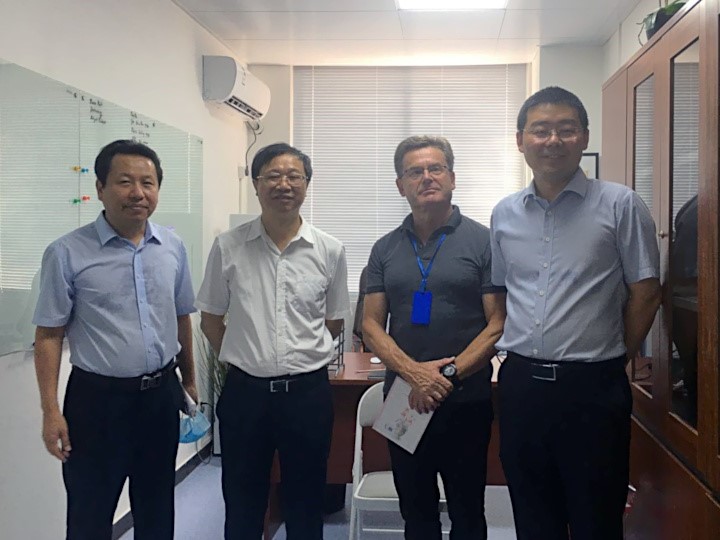
On the afternoon of September 4th, President Song Xianzhong, Vice President Wang Bing, and Director Chen Zhenqiang from the Human Resources Development and Management visited and expressed condolences to Academician Martin Banwell at IAACS.President Song and colleagues from the University Executive showed their great interest in the progress of Academician Martin Banwell’s work at IAACS and his life more generally in China. They visited his new laboratories that are under construction, and encouraged the IAACS to make persistent efforts, strive for the training of young teachers and graduate students, establish an international platform, and obtain high-level scientific research results. The leadership of the university expressed their affirmation and gratitude to Academician Martin Banwell, and extended their sincere greetings on the Teacher’s Day. At the same time, they encouraged the IAACS to continue their efforts in teaching and research work, implement the spirit of the important speech of Jinan University’s inspection as mentioned by the Chainman Jin Ping, enhance the comprehensive competitiveness and influence, and make contributions to polishing Jinan's golden signboard, so as to assist the school’s “Double First-class” and high-level university construction.